Facing problems meeting the needs of your customers while growing your ecommerce business?
AI technologies will be helpful in automating repetitive work, offering personalized shopping, improving customer service, and optimizing your processes.
Thanks to AI technologies, you will be able to do other things rather than performing boring tasks such as answering questions from your customers, creating content, optimizing searches, and so forth.
This guide is going to provide you with the 10 best AI technologies for ecommerce in 2026 along with their features, pros, cons, and uses.
What Are AI Tools for eCommerce?
AI tools for eCommerce are software solutions utilizing technologies like machine learning, generative AI, NLP, and AI agents to automate processes and enhance the online buying experience.
According to Gartner, 31% of respondents were ready to allow AI to reduce product choices for their households' needs, and 28% of them for personal electronics.
These include the generation of product content, personalization, analysis of customers' behavior, marketing automation, improving product search, and customer support.
More sophisticated AI tools can also perform actions within e-commerce processes under the rules established by humans.
Best AI Tools for Ecommerce at a Glance
1. Thunai - Best for AI customer support automation


Thunai is an AI-powered platform that helps ecommerce businesses automate customer conversations and workflows, and it is frequently listed among the best AI tools for ecommerce
Supports AI agents for ecommerce across chat, voice, and email to handle customer queries and routine tasks.
Thunai connects with business systems to assist with more complex workflows and human handoffs.
Features
- Omnichannel AI agents for voice, chat, and conversational AI e-commerce chatbots.
- Automates order tracking, returns, cancellations, and customer queries.
- Real-time sentiment detection with human escalation, an approach that can support more proactive AI e-commerce customer support.
Pros
- Automates repetitive e-commerce support and workflows.
- Integrates AI assistance across multiple customer channels.
Cons
- Better suited to businesses that need advanced AI automation.
- Setup may require integration with existing business systems.
2. Shopify Magic -Best for AI product content and store operations

Shopify Magic is a set of artificial intelligence-based tools that comes along with the platform for managing shops.
These tools can create product descriptions, marketing materials, images, and other shop assets, allowing Shopify sellers to save time without making much use of external AI-based tools.
Features
- Creation of product descriptions, marketing text, and content.
- Image editing and content creation with AI.
- Sidekick offers AI assistance in Shopify shop management.
Pro
- Built directly into the Shopify ecosystem.
- Easy starting point for Shopify merchants using AI.
Cons
- Primarily designed for Shopify stores.
- Advanced functionality depends on Shopify's available AI features.
3. Klaviyo AI - Best for Email and SMS marketing
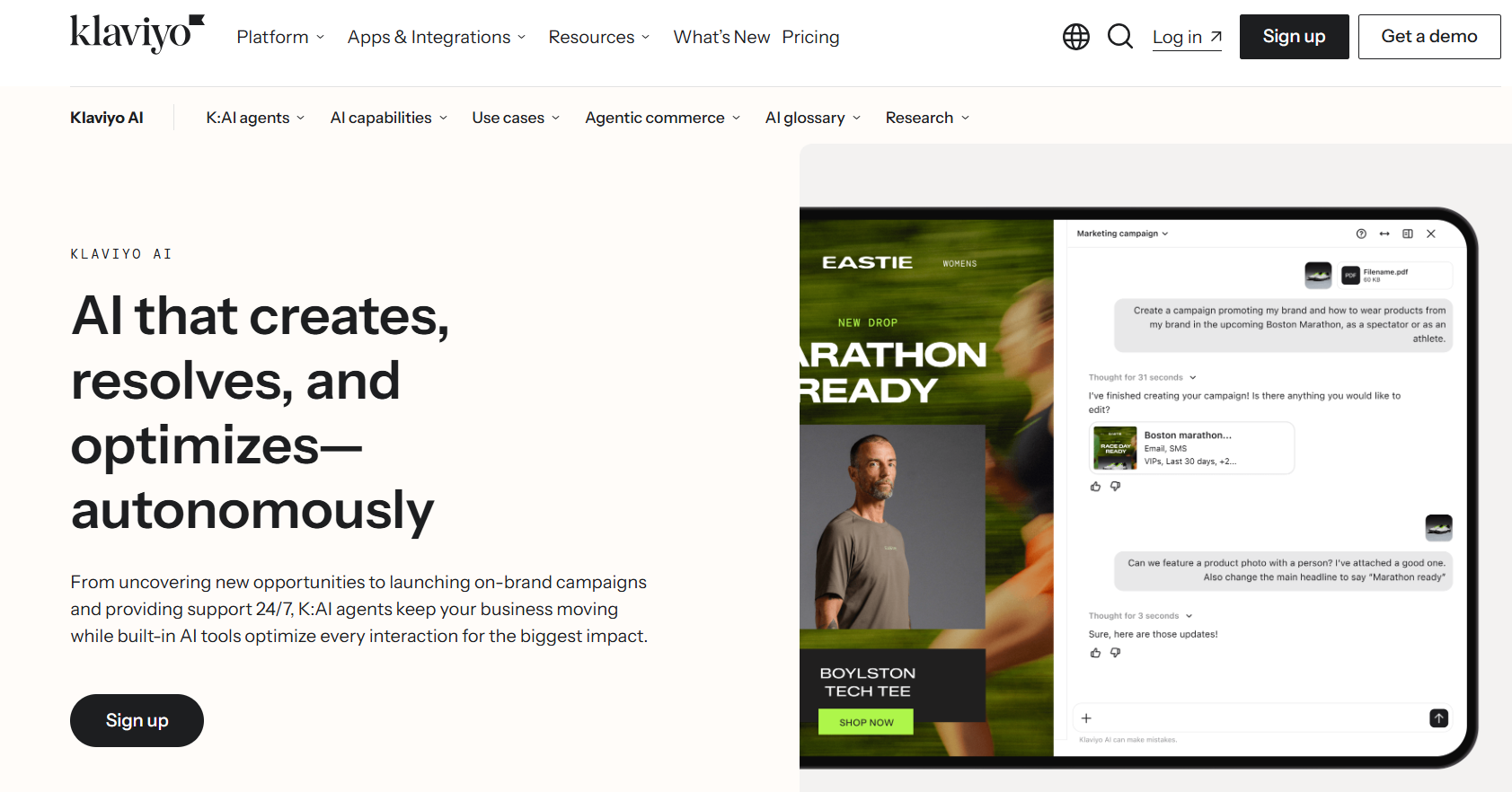
Klaviyo AI software allows e-commerce businesses to have improved and personalized email and text campaigns.
Klaviyo AI makes use of customer data and behavior analysis to provide segmentation and campaign optimization, among other functions.
Features
- Email and SMS marketing powered by AI.
- Use of predictive analytics for customer behaviors and segmentation.
- Creating personalized campaigns based on customer and purchasing data.
Pros
- Effective for e-commerce retention and personalized marketing campaigns.
- Uses customer information with automated marketing processes.
Cons
- Pricing becomes more expensive as the number of customers/contacts increases.
- More focused on marketing than customer support or operations.
4. Gorgias - Best for automated ticket resolution and order queries
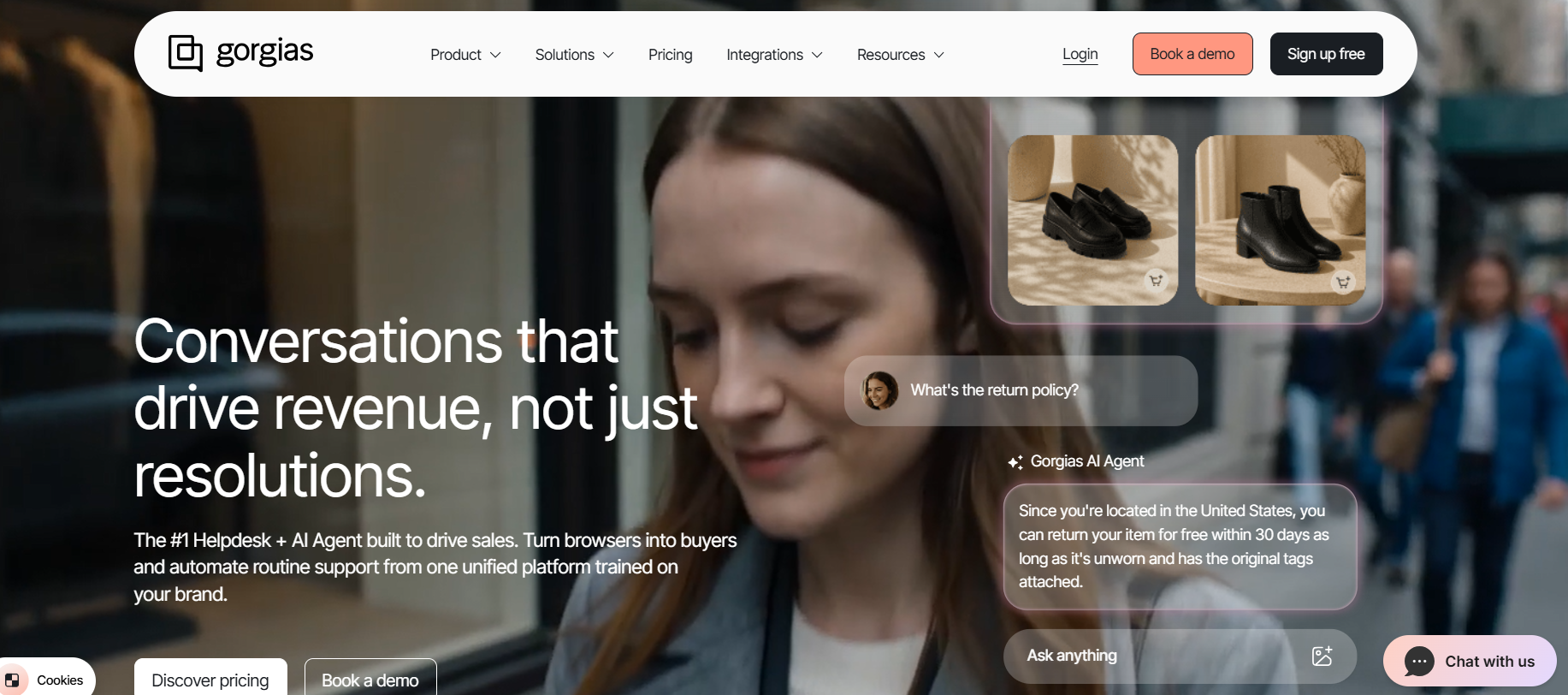
Gorgias is an AI-driven customer service solution for e-commerce businesses that deal with frequent requests regarding orders, shipping, returns, and other issues.
Gorgias e-commerce integrations give support teams access to customer and order information while they chat with customers.
Features
- AI-powered customer support and ticket automation.
- Integrates customer conversations with ecommerce data.
- Automates common questions about orders, shipping, and returns.
Pros
- Built specifically for ecommerce customer service.
- Helps reduce repetitive support workload.
Cons
- Costs can increase as support volume grows.
- Primarily focused on customer service rather than broader ecommerce operations.
5. Jasper - Best for Ecommerce content creation
Jasper is an AI content creation tool that can be used by businesses to generate marketing and brand content.
It can be used by e-commerce companies to generate product descriptions, advertisements, emails, blog content, and social media copy.
The Features for brand content generation will ensure that there is consistency in the tone of marketing content.
Features
- Generates product descriptions and marketing copy.
- Helps with brand voice and content customizations.
- Creates campaign, ad, email, and social media content.
Pros
- Useful in creating a lot of marketing content.
- Helps maintain consistent brand messaging.
Cons
- Requires human review for accuracy and brand suitability.
- Primarily focused on content rather than ecommerce operations.
6. Canva AI -Best for Ecommerce design

This is an AI-powered tool created by Canva that combines AI generation with the design capabilities of Canva in order to enable companies to rapidly generate their marketing assets.
The tools make it easier for e-commerce teams to create and manipulate product photos, advertisements, social media posts, and other marketing graphics.
The tools are particularly useful for teams that need professional-looking graphics but have no graphic design skills.
Features
- Product and marketing visuals generated by AI.
- Generates and edits visual content using prompts.
- Supports social media, advertising, and promotional designs.
Pros
- Easy for ecommerce teams without professional design skills.
- Useful for creating multiple marketing assets quickly.
Cons
- Not an ecommerce-specific automation platform.
- Advanced AI capabilities may require a paid plan.
7. Algolia - Best for Product discovery and personalized search
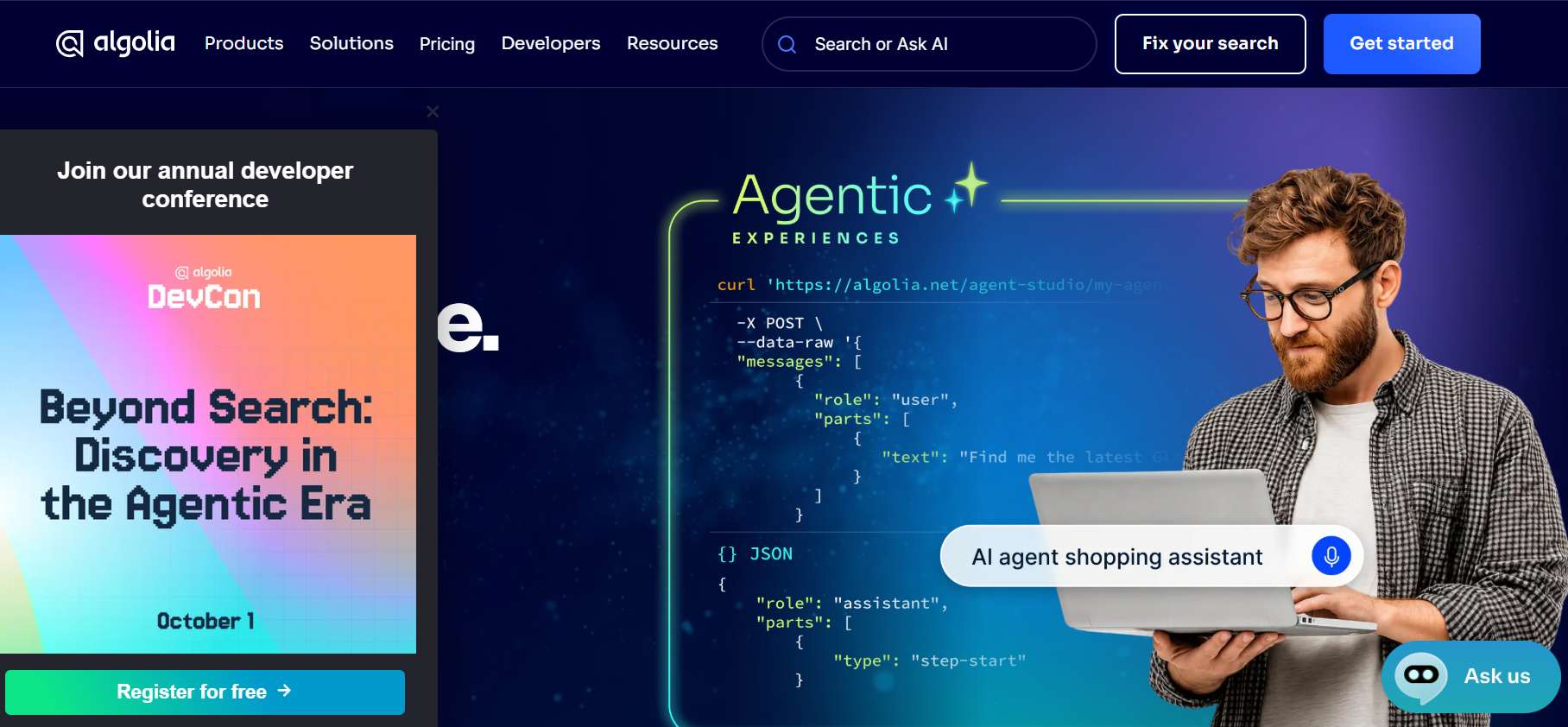
Algolia is a technology that utilizes AI to provide ecommerce sites with a search and discovery solution that will allow for quicker and more targeted product searches.
It is able to detect user intention and optimize product discovery via personalized search and recommendations.
The technology is especially useful for ecommerce businesses working with big inventories.
Features
- AI-powered ecommerce search and product discovery.
- Personalized search and product recommendations.
- Fast search across large product catalogs.
Pros
- Improves product discovery across ecommerce websites.
- Scales well for businesses with large catalogs.
Cons
- Primarily focused on search and discovery.
- Implementation can require technical expertise.
8. Intercom - Best for Conversational support and automated resolutions
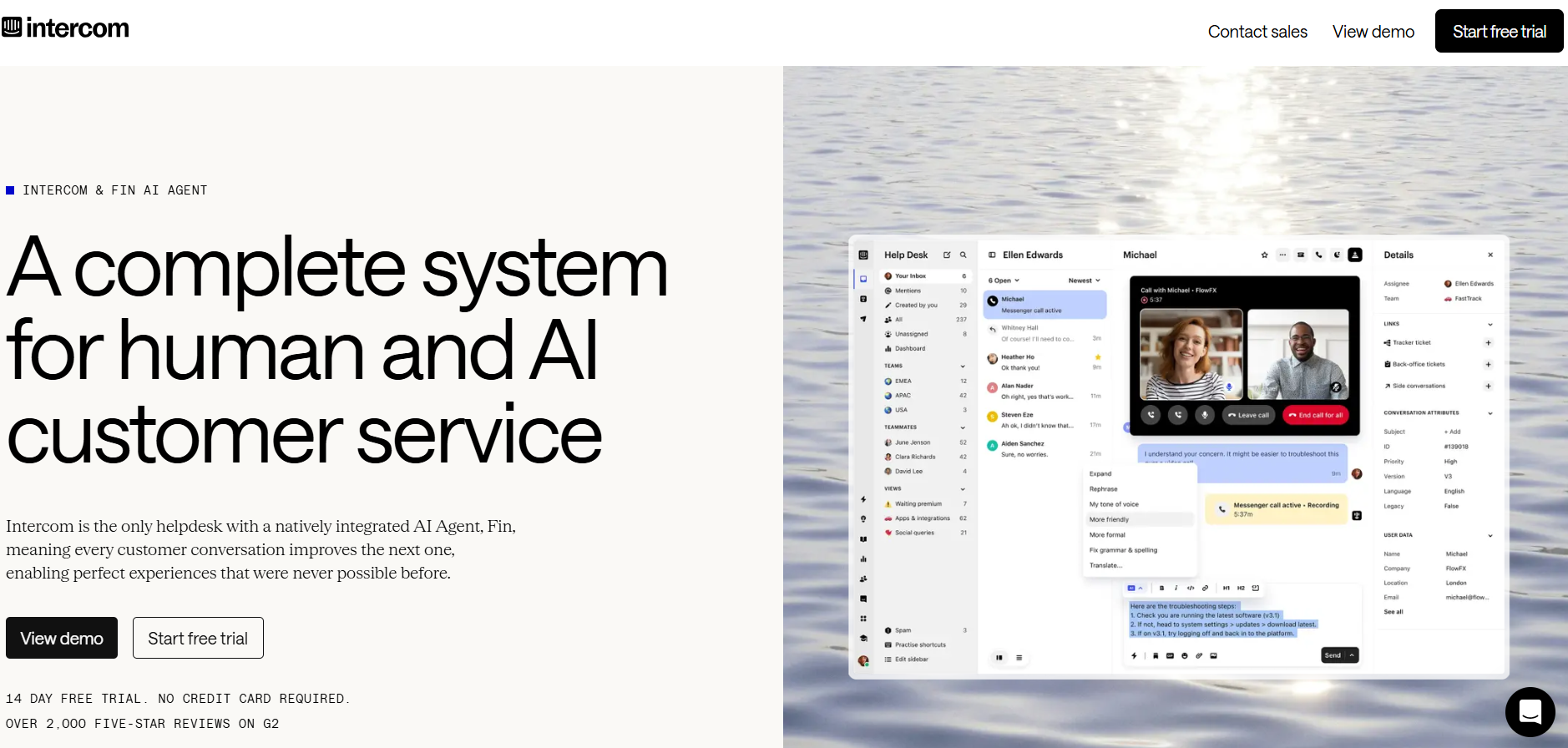
Intercom offers customer support and conversational services to organizations with the help of artificial intelligence.
Artificial intelligence helps answer queries through business knowledge and support.
Ecommerce support teams can leverage this service to offer better support by routing difficult queries to human agents.
Features
- AI-based customer support agents.
- Answers generated through automation using business knowledge and customer context.
- Omnichannel messaging and support automation.
Pros
- Good conversational artificial intelligence and customer support services.
- Few repetitive queries answered by human agents.
Cons
- Pricing can become expensive as usage grows.
- May require integration work for complex ecommerce workflows.
9. Nosto - Best for Ecommerce personalization
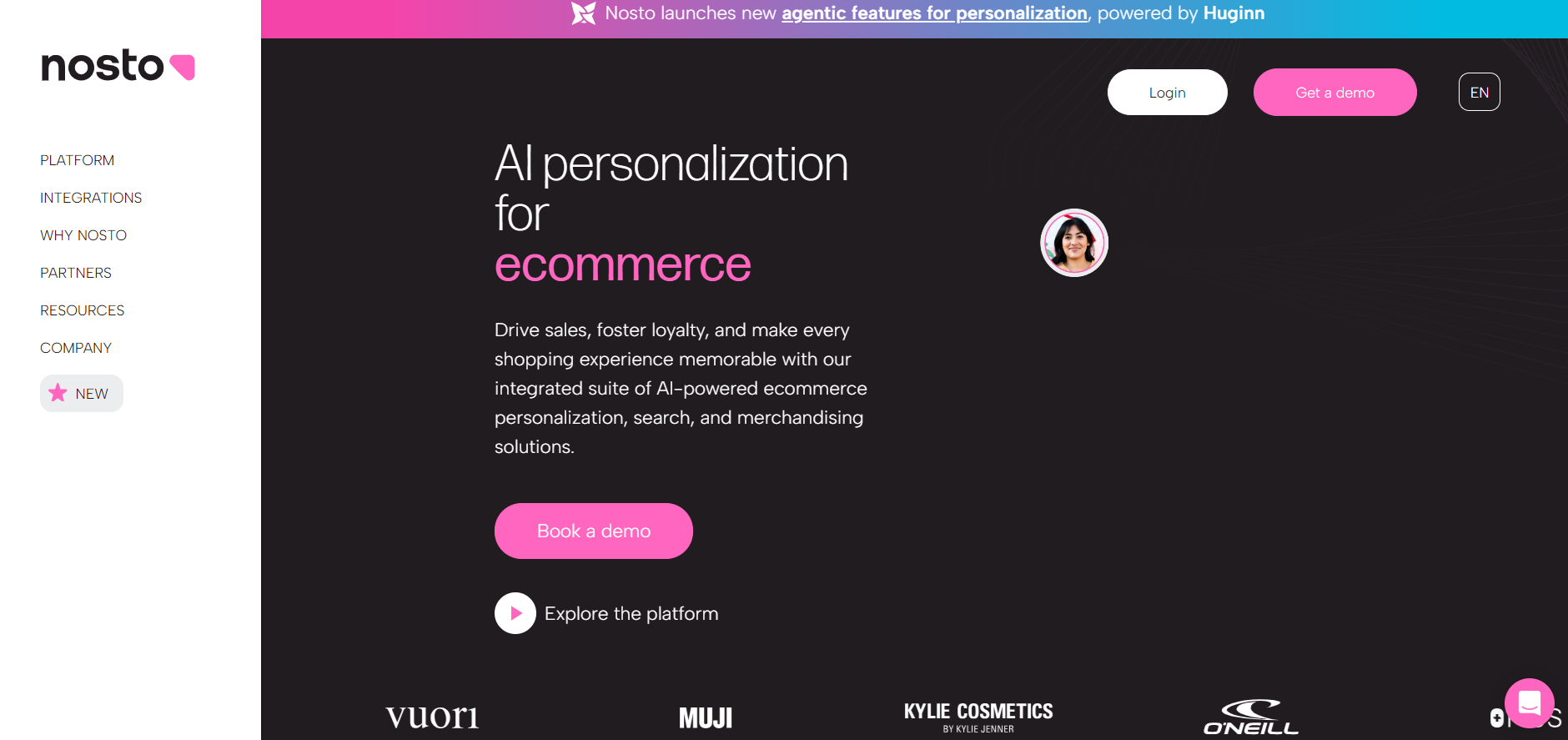
Nosto is a system that ecommerce businesses use for personalizing their customers through artificial intelligence.
The system facilitates product recommendations, personalization, and segmentation. E-commerce businesses rely on shopper behavior to ensure that products are discovered easily, increasing conversion rates.
Features
- Product recommendations and personalization using artificial intelligence.
- Shopping experiences customized based on customers' behavior.
- Merchandising and product discovery using artificial intelligence.
Pros
- Provides e-commerce companies with the ability to personalize the customer journey.
- Effective in boosting product discovery and upselling.
Cons
- Better suited to established or larger ecommerce businesses.
- Pricing and implementation can be more complex than basic AI tools.
10. Rebuy - Best for Product recommendations
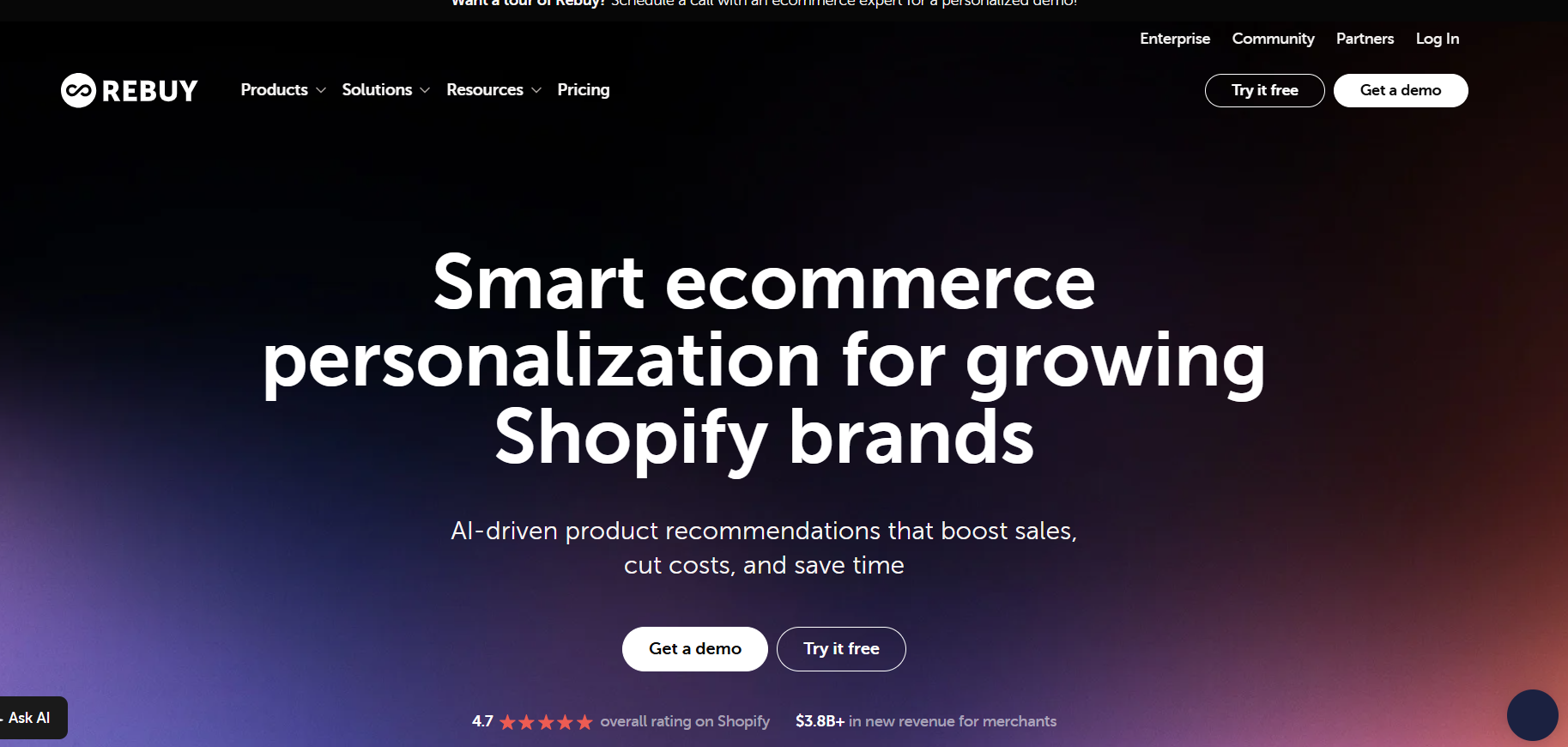
Rebuy is a product recommender system using artificial intelligence, which is specifically designed for ecommerce revenue maximization.
The system enables ecommerce owners to generate personalized upsell, cross-sell, bundle, and post-purchase offers.
Features
- AI-driven upsell and cross-sell.
- Personalized product recommendations and bundles.
- Smart cart and post-purchase offers.
Pros
- Specifically developed for revenue maximization in e-commerce.
- Effective for stores that use Shopify.
Cons
- Focuses on conversion and upselling.
- Not good for customer service automation.
How to Choose an AI Tool for Ecommerce?
When addressing particular concerns like customer service, SEO, personalization, and marketing automation,
platform integration, artificial intelligence capabilities, price, scalability, data security, and implementation should be taken into account.
Product catalogues, number of customers, and processes must also be taken into account.
How AI Tools for eCommerce Work?
The exact process varies by tool, but most follow these core steps:
- Collecting and Understanding Business Data
AI applications interact with the product catalog, customer information, frequently asked questions, order details, CRM databases, and more.
Through this interaction, AI gains context to give relevant suggestions, content, and assistance.
- Understanding Customer Intent
If a customer has any queries or is looking for a certain product, the AI decodes the language and context to know their actual requirements.
Conversational AI is capable of answering natural questions instead of being dependent solely on keywords.
- Generating Personalized Responses
Product descriptions, recommendations, marketing materials, or customer response messages are created by Generative AI using the existing context.
Personalized output can be delivered by AI through understanding customer behavior, preferences, and purchasing history.
Gartner found that 51% of customers would be willing to use a GenAI assistant for customer-service interactions on their behalf.
- Taking Actions Through AI Agents
Advanced AI agents can go beyond generating answers. Accenture estimates that 20% of e-commerce transactions could be executed by AI platforms this decade, while 4 in 5 digital interactions are expected to move into agentic AI interfaces by 2028.
With access to approved tools and business systems, they can perform tasks such as checking orders, initiating returns, updating CRM records, or escalating complex issues to human agents.
- Learning From Results
AI systems may leverage interaction and performance data for pattern recognition that allows them to make better recommendations, automation, and user experiences, while exercising appropriate human controls and oversight.
Benefits of AI Tools for eCommerce
There are AI technologies that assist eCommerce companies in automating processes, personalizing user experience, improving support, and making fast decisions based on data.
Benefits include:
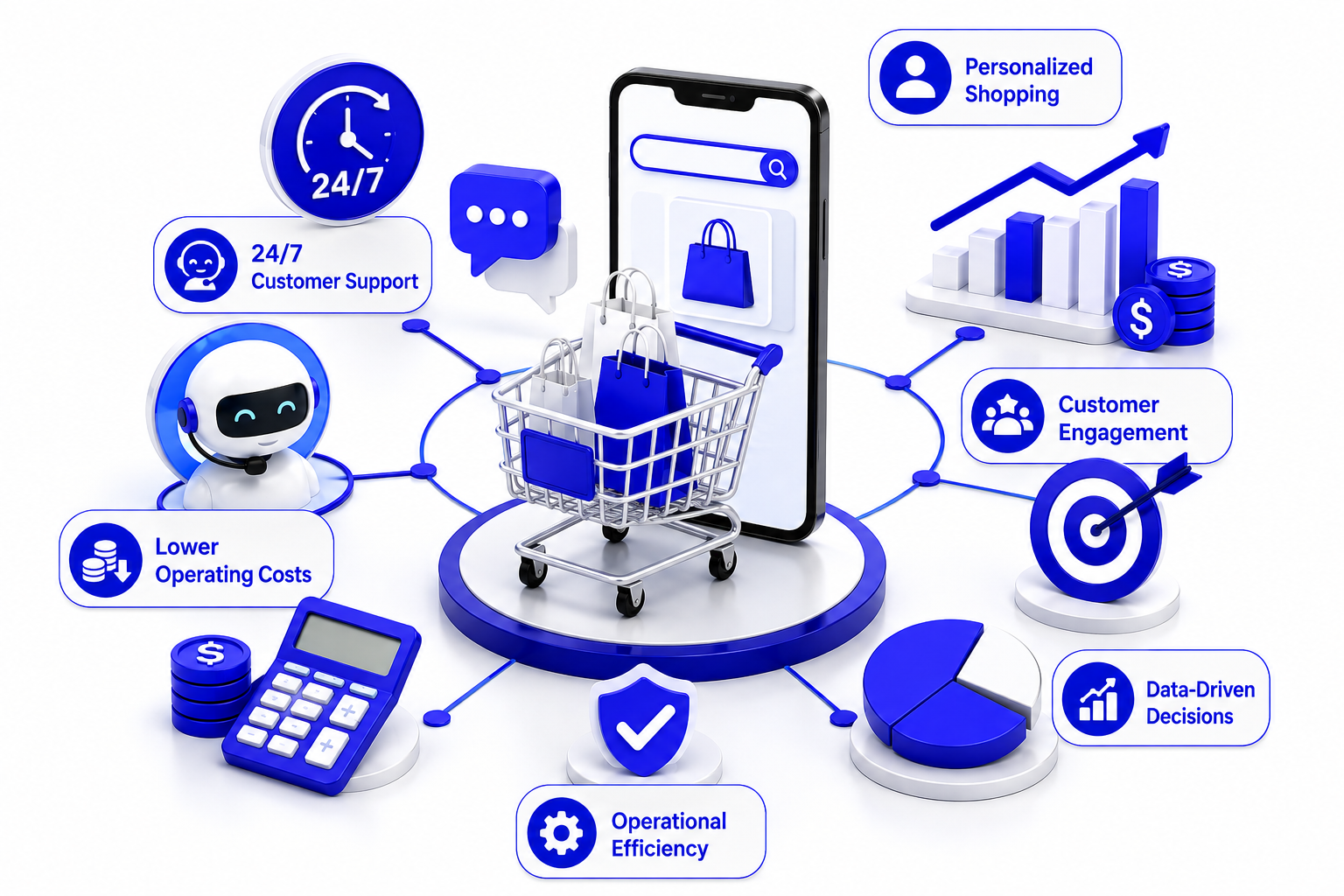
- Higher Operational Efficiency: AI assists in various functions such as writing copy, replying to customer questions, data analysis, and the marketing process. This will save time on other matters.
- Personalized Shopping Experience: The AI understands customers’ behavior, their likes, dislikes, and purchasing patterns, providing tailored recommendations, deals, information, and a shopping experience.
- 24/7 Customer Support: AI-assisted staff can handle routine queries, track orders, return issues, and many other routine problems around the clock, passing the complicated ones to the human assistants.
Gartner predicts agentic AI could reduce customer-service operational costs by 30% by 2029.
- Lower Operating Costs: Automation of customer service, content creation, and other routine processes helps save costs and resources, thus allowing businesses to grow without hiring the corresponding number of staff.
- Better Customer Engagement: The employment of AI technology helps businesses react quickly, make appropriate recommendations, conduct targeted marketing campaigns, and proactively engage to improve customer satisfaction and retention.
- Data-Driven Decisions: AI technology may be employed to analyze huge amounts of data about customers, sales, and products to recognize trends and demands and create effective marketing campaigns.
FAQs on AI Tools for Ecommerce
Which are the best AI tools for ecommerce in 2026?
It depends upon the need of yours. Some of the best AI tools are Shopify Sidekick, Thunai, Gorgias, Klaviyo, Algolia, and Surfer.
Which is the best AI tool for Shopify?
Among the most useful tools available to Shopify entrepreneurs is Shopify Sidekick. It operates within the Shopify platform and is used in all sorts of ecommerce activities, including content management and creation, analytics, and automation.
Which is the best AI tool for ecommerce customer service?
Some good ecommerce customer service AI solutions are Thunai, Gorgias, and Shopify Inbox. These solutions are able to automatically reply to common questions, generate AI responses, and generally manage customer conversations.
Can AI automate ecommerce customer support?
Yes, it is possible because AI technology can automate various routine customer support tasks like answering FAQ questions, order tracking, common inquiries, etc.